Four brave doctors stood by 430,000 Tamils being slaughtered in an act of genocide in Mullaivaikal, Northeastern Sri Lanka. They performed thousands of medical interventions saving as many lives. Some were victims of banned incendiary, thermobaric and cluster munitions.
They had to build make-shift operating theatres as they were constantly forced to move location due to shifting front lines. Their hospitals were incessantly shelled by Sri Lankan forces. They had to use the very limited medical supplies provided by Sri Lanka's government, who were actively perpetrating a war crime by denying them.
I still remember one doctor, who also suffered shrapnel injury from Sri Lankan army shelling, vividly describing how a patient was awakening mid-procedure due to the necessary rationing of anaesthetics. In another instance he told me how had to perform an above wound amputation on a leg that had a cluster bomblet embedded in it.
Yet as the civil war reached its close, Frances Harrison, a former BBC correspondent reveals, how some so-called members of a London based Tamil diaspora organisation wanted these doctors to commit suicide by ingesting cyanide in a publicity stunt rather than crossover into government held territory.
These doctors were to later provide invaluable evidence to the UNHRC inquiry into war crimes and crimes against humanity, that formed the basis for a resolution passed by it demanding Sri Lanka investigate and prosecute the perpetrators of such crimes in a hybrid court with international judges.
The irony of this is while two female English journalists Harrison and Marie Colvin were trying to save Tamil lives, some self-appointed Tamil representatives in London were involved in inciting the death of four doctors who saved thousands of Tamil lives
LTTE Front Organization Wanted Medics To Take Cyanide Instead Of Surrender: Frances Harrison

A LTTE front organization in London wanted rebels medics to take their cyanide capsules instead of surrender to the Sri Lankan government, Frances Harrison reveals.
"I was left wondering if they just wanted to score a propaganda point in the media, rather than actually save lives", Harrison, a former BBC Correspondent, writes in her book – Still Counting the Dead: Survivors of Sri Lanka's Hidden War about the last phase of the conflict.
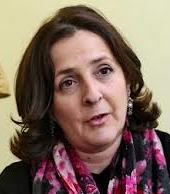
Frances Harrison
In the chapter " The Spokesman", she detailed the story of the LTTE political wing leader, Nadesan, and his deputy, Pulidevan's surrender negotiations and the role she played on or about 18 May 2009 at the end of Sri Lanka's civil war.
The three paragraphs below are from Pages 66- 67
"On the last week end of the war, Puli and Nadesan telephoned Colvin and asked her to persuade the United Nations to oversee their unconditional surrender, along with a group of forty fighters and family members. Puli made his wife leave the war zone with the exodus of civilians, promising they would meet up again but warning it might take several years.
"There were no more jokes, no pleasantries; they were really waiting for an answer,' Colvin said. She called the UN Secretary- General's special envoy, Vijay Nambiar, who was traveling. The first time they spoke, Numbiar told Colvin he thought it would be an uphill struggle to persuade the Sri Lankan government to accept a surrender: They seems to want to go all the way.' The second time they spoke, Colvin had woken Numbiar up at five in the morning. He said he'd been invited to witness the surrender of group of Tigers but didn't think it was necessary to go in person.
'Shouldn't you go? This is a very, very fraught situation,' Colvin asked, horrified that he didn't seem to want to seize the opportunity. Numbiar told her he'd received assurances from President Rajapaksa that the tigers who surrendered would be safe, and he thought that was sufficient.
I too received a call that weekend, from a Tamil doctor in London who wanted to tell the media that rebel medics wished to cross into army territory, bringing with them hundreds of civilians and injured people. He'd already tried UN and the Red Cross, who were unable to help. The doctor was flustered and distraught, unsure when he'd be able to speak to his colleagues on the ground again, aware their lives hung in the balance. I told him it seemed odd to negotiate surrender through the media – direct negotiations with the government might be better given that time was running out so fast. He consulted colleagues in a Tiger front organization in London, who insisted the medics should take their cyanide capsules because surrender was not an option. I was left wondering if they just wanted to score a propaganda point in the media, rather than actually save lives."
Posted by: DR ARUJUNA Sivananthan <aru.siva@hotmail.co.uk>
| Reply via web post | • | Reply to sender | • | Reply to group | • | Start a New Topic | • | Messages in this topic (1) |

tamil_araichchi-subscribe@yahoogroups.com ���
Ask your friends to join this forum by sending a subscription request mail to
tamil_araichchi-subscribe@yahoogroups.com
http://www.araichchi.com/
.............................................
Tamil-Fonts, Tamil-Software_Download
Tamil-word_processing, Tamil-eMail, Tamil-Internet)
http://www.araichchi.com/kaNiNi/index.html
.............................................
eMail setup, Tamil Fonts, Keyboard drivers and help:
http://www.araichchi.com/kaNiNi/index.html
..................................


0 comments:
Post a Comment